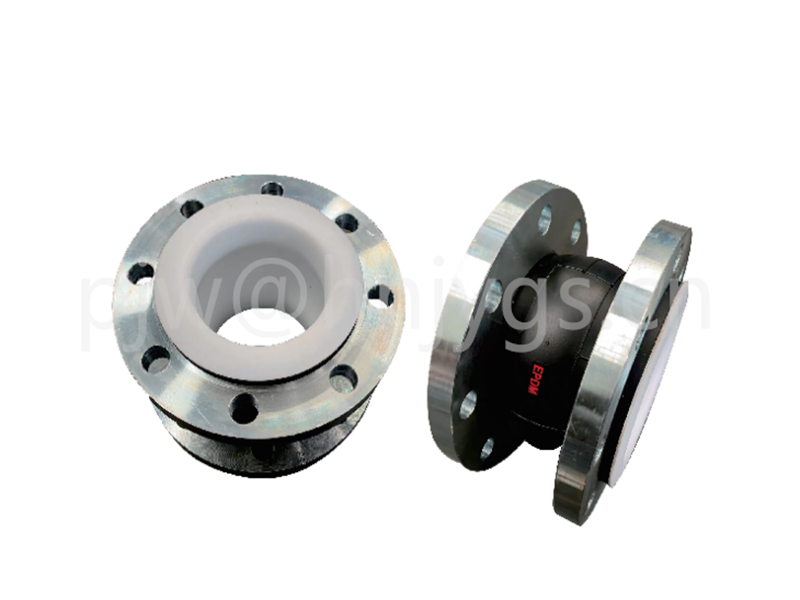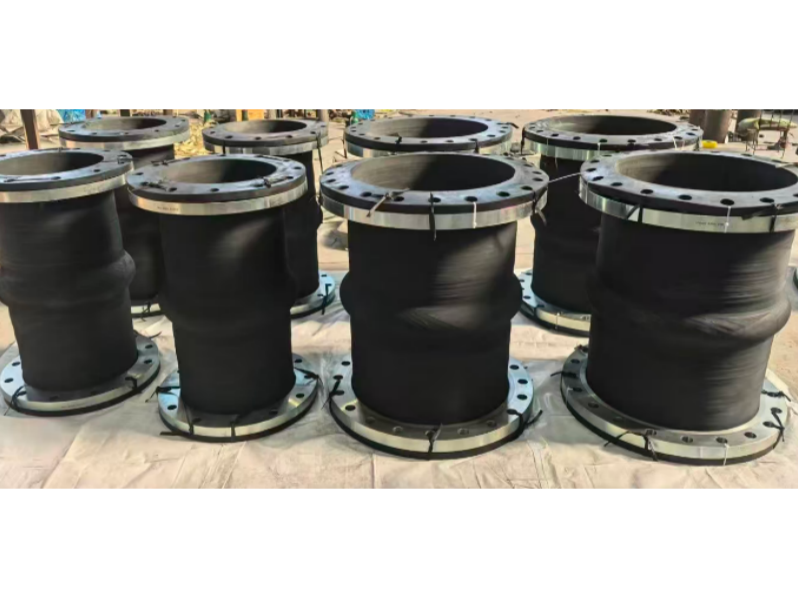
The EPDM and PTFE rubber expansion joints are used together. The supplier of PTFE rubber expansion joints,
Large compensation capacity rubber expansion joints, the factory of rubber expansion joints
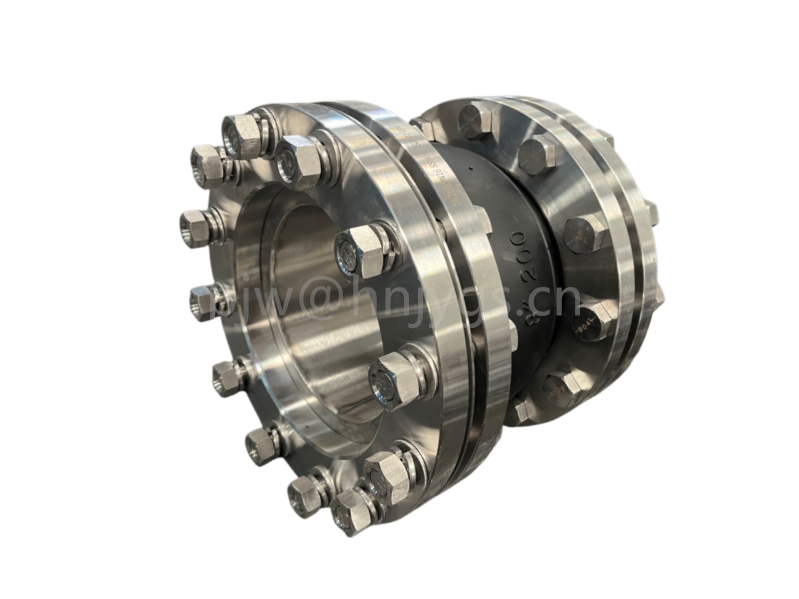
Overview of EPDM and PTFE Rubber Expansion Joints Technology:
The rubber expansion joint is a flexible connection component used in pipeline systems.
Its main function is to compensate for the displacement and deformation of the pipeline caused by thermal expansion and contraction,
vibration or installation errors.
Among them, EPDM (terpolymer ethylene propylene diene monomer) and
PTFE (polytetrafluoroethylene) are two common materials,
each with different characteristics and application fields.
I. Material Characteristics
The EPDM rubber expansion joint is mainly made of ethylene propylene diene monomer (EPDM) rubber.
Its molecular structure possesses excellent weather resistance, ozone resistance, and ultraviolet resistance.
This material can maintain elasticity within the temperature range of -40°C to 120°C,
and has certain corrosion resistance to weak acids, weak bases, and polar solvents.
In addition, the EPDM expansion joint usually has good shock absorption and sound insulation effects.
The PTFE rubber expansion joint is mainly made of polytetrafluoroethylene (PTFE).
It has high chemical stability.
This material can withstand strong acids, strong bases, and various organic solvents,
and the applicable temperature range is approximately -50°C to 250°C.
The surface friction coefficient of PTFE is low, and it is not prone to adhering to media,
and is suitable for high cleanliness or high corrosive conditions.
II. Structure and Application
Both types of expansion joints are typically composed of rubber or PTFE layers, an reinforcing fabric layer, and metal flanges.
The reinforcing layer can enhance the pressure-bearing capacity, and the metal flanges are used for connecting the pipes.
EPDM expansion joints are commonly used in water supply, heating, air conditioning systems, and some industrial pipelines, and are suitable for water, steam, and mild chemical media.
PTFE expansion joints are mainly applied in industries such as chemical, pharmaceutical, and electroplating for transporting corrosive media.
III. Installation and Maintenance
During installation, select the appropriate model based on the pipeline design parameters.
Ensure that the expansion joint is properly aligned with the pipeline to avoid distortion or excessive stretching.
Regular inspections should include surface aging, cracks, and leakage conditions.
In corrosive or high-temperature environments,
a maintenance schedule should be determined based on the material properties.
IV. Notes
When selecting, factors such as the nature of the medium, temperature range, pressure level, and environmental conditions should be comprehensively considered.
EPDM is not suitable for lubricating oils or hydrocarbon solvent media;
PTFE requires assessment of mechanical strength under high temperature and high pressure conditions.
Installation and maintenance should follow relevant technical standards.
The above content provides an introduction to the basic technology of EPDM and PTFE rubber expansion joints.
The specific application should be determined based on the actual engineering requirements.